Introduction
Continuous glucose monitors (CGMs) have become valuable tools for individuals with diabetes to measure blood glucose levels and inform clinical decisions.1 Originally developed for Type 1 diabetes management, CGMs have recently been adopted for the management of Type 2 diabetes as well, further increasing the number of patients using this technology.2 When used correctly, CGMs accurately measure blood glucose and support effective management of both Type 13,4 and Type 24,5 diabetes in the outpatient setting.2,4
Despite this increase in use and demonstrated effectiveness, healthcare providers have historically been hesitant to use CGMs in the inpatient setting due to insufficient evidence on their accuracy and safety in the hospital setting.6 This hesitation was temporarily overcome during the COVID-19 pandemic7 when CGMs offered a way to decrease staff interaction with patients with COVID-19, thereby reducing exposure and conserving personal protective equipment.7 During that time, the U.S. Food and Drug Administration (FDA) temporarily authorized CGM use in the inpatient setting8; however, this FDA authorization expired in 2023, and inpatient use is once again considered off-label.9 Because inpatient CGM use is, at the time of this publication, still investigational, the standard treatment for hospitalized patients with diabetes is to perform capillary point-of-care (POC) glucose testing three or four times per day.10
Interest in inpatient CGM use continues to grow among both patients and healthcare providers. Many patients prefer to rely on their CGM instead of having to undergo frequent finger-stick testing.11,12 Recent research has demonstrated the feasibility of inpatient CGM use10,12 and shown that, when used correctly, CGMs provide reliable readings within an acceptable margin of error compared with finger-stick glucose checks.11,13 CGMs have been shown to effectively monitor trends, improve glycemic control,14 and detect hyperglycemia15–17 and hypoglycemia16–20 in the inpatient setting.11 With the evolving landscape surrounding the use of CGMs, policies governing inpatient CGM use vary across, and within, facilities. When inpatient CGM use occurs, either through explicit policy or because patients decline other blood glucose monitoring methods, providers typically follow additional documentation and consent procedures to ensure that CGM use is recorded and communicated across departments.21–23
Despite recent research supporting inpatient CGM use,7,11,13,15,22,24 data about the potential patient safety risks in Pennsylvania facilities have not been explored. This study reviews patient safety event reports and summarizes the impact of CGM use on patient safety in the inpatient setting.
Methods
Data Query
Data for this study were collected from the Pennsylvania Patient Safety Reporting System (PA-PSRS)[1], a statewide repository for patient safety event reports. With over 5 million reports, PA-PSRS is among the largest databases of its kind in the world.25 All PA-PSRS reports utilize a standard taxonomy with many structured fields and several free-text narrative fields that provide descriptive information about the event. The quality of information and level of detail provided in the free-text fields may vary from one report to another.
We queried the PA-PSRS database for reports submitted between January 1, 2022, and December 31, 2025. To adequately capture inpatient events, we limited the facility type to acute care hospitals and 16 care area groups[2]: Medical-Surgical, Psychiatric Unit, Specialty Unit, Rehab Unit, Rehab Services, Surgical Services, Imaging/Diagnostic, Intermediate Unit, ICU, Pediatric, Pharmacy, Respiratory, OB/Gyn Unit, Labor and Delivery, PICU, and Other.
To identify reports describing the presence or use of a CGM, we searched the free-text fields for the keywords “continuous glucose monitor” or “cgm.” We also searched for reports referencing CGM brands/products approved by the FDA26 and recognized by the American Association of Clinical Endocrinology,27 including FreeStyle Libre, Dexcom, Stelo, Medtronic Guardian, and Eversense. Because “Dexcom” refers both to the manufacturer (e.g., Stelo by Dexcom) and to specific CGM products (e.g., Dexcom G7), we searched for “stelo” as an exact-match term and treated “dexcom” as a separate search target.
We applied several complementary strategies to capture variations in how these products were described and to account for spelling and typographical errors. First, we used the truncated term “freestyle lib” to capture all iterations of the product FreeStyle Libre. We then applied fuzzy matching[3] to “dexcom,” “eversense,” and “medtronic guardian.” During this process, we identified and excluded false-positive matches containing the roots “decom” or “decomp,” which were flagged as variants of “dexcom” but referred instead to patient decompensation unrelated to CGM use.
To broaden our detection strategy, we also used regular expression (regex) pattern matching to identify reports in which the word “continuous” appeared up to 35 characters before the terms “bg,” “glucose,” or “sugar” in the free-text fields. This approach helped capture relevant reports that did not explicitly reference a CGM in general or a specific CGM manufacturer, product, or brand name.
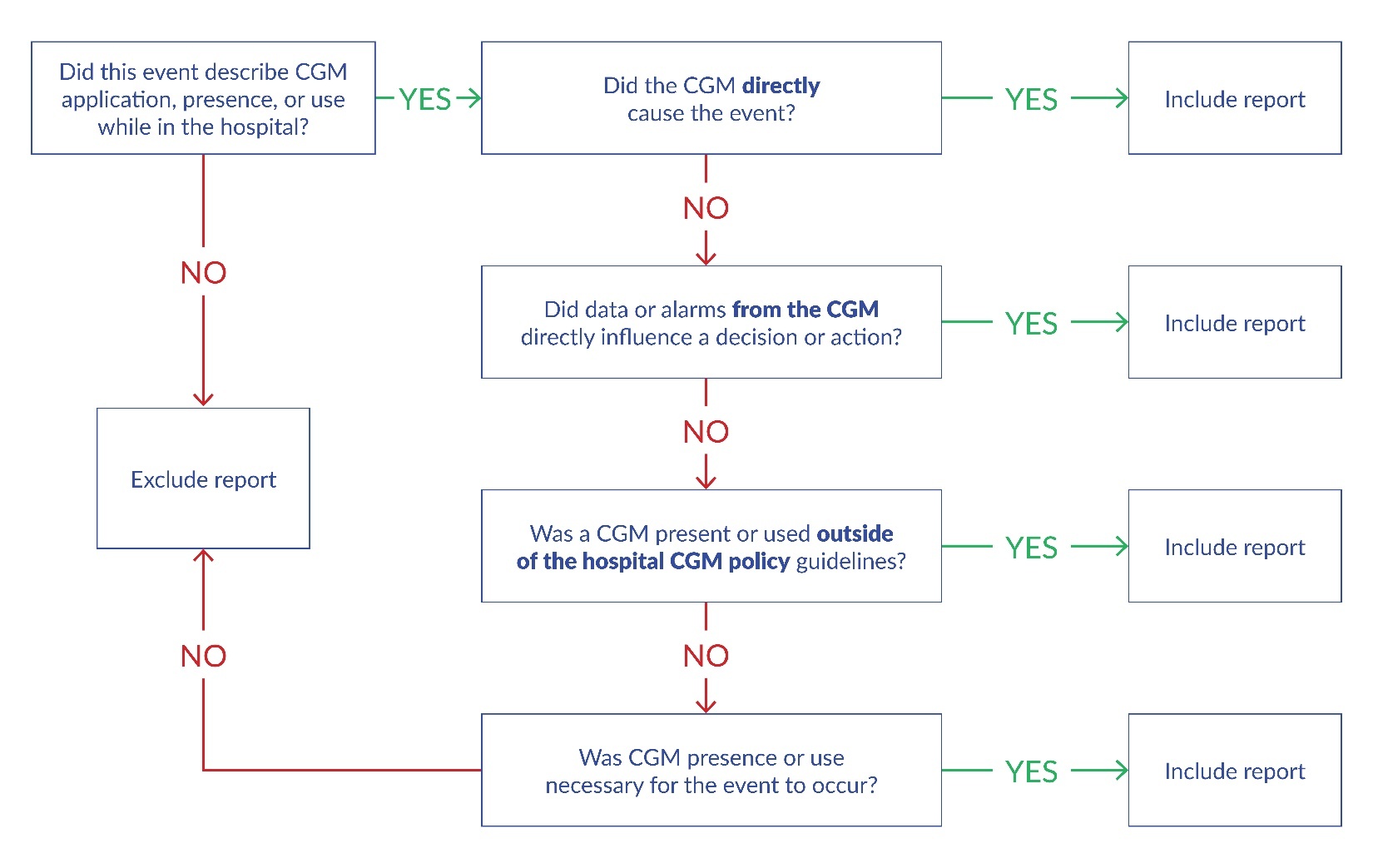
The query produced a total of 387 reports that were manually reviewed for inclusion. Reports were eligible if they described an inpatient safety event in which the presence or use of a CGM could have influenced the risk of patient harm.
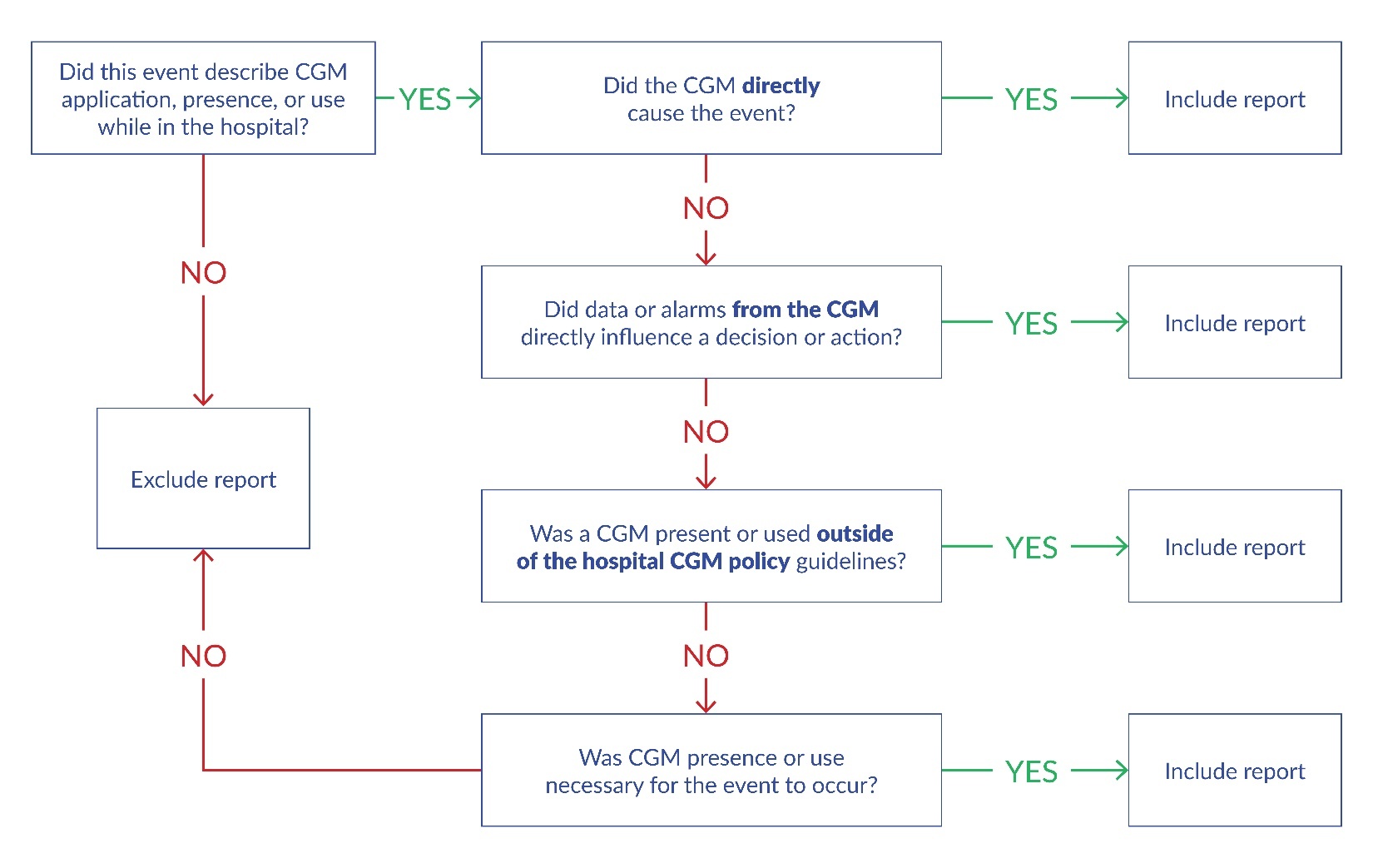
We applied a decision tree to assess whether each report met inclusion criteria. Figure 1 illustrates the decision tree and how it was used to determine inclusion.
Variables Coded
To ensure accuracy and consistency, all reports were manually reviewed and independently coded by two researchers. The researchers compared their coding and resolved differences through discussion in an iterative consensus-building process. When discrepancies could not be resolved, a third researcher with expertise in patient safety adjudicated the final determination.
Two sets of variables were coded for each report. One set of variables was coded by the reporter at the time of report submission and included existing PA-PSRS fields, such as patient sex[4], patient age, and care area. The second set of variables was inductively derived and manually coded by the researchers to categorize and characterize the event reports related to CGMs.
Our primary objective was to identify reports describing patient safety issues related to the use of CGMs (“CGM risk events”). During manual review, we also encountered reports that described scenarios in which a CGM did not cause or contribute to the event but instead helped prevent potential patient harm (“CGM mitigation events”). To reflect these distinct contexts, we coded each report accordingly and analyzed the groups separately.
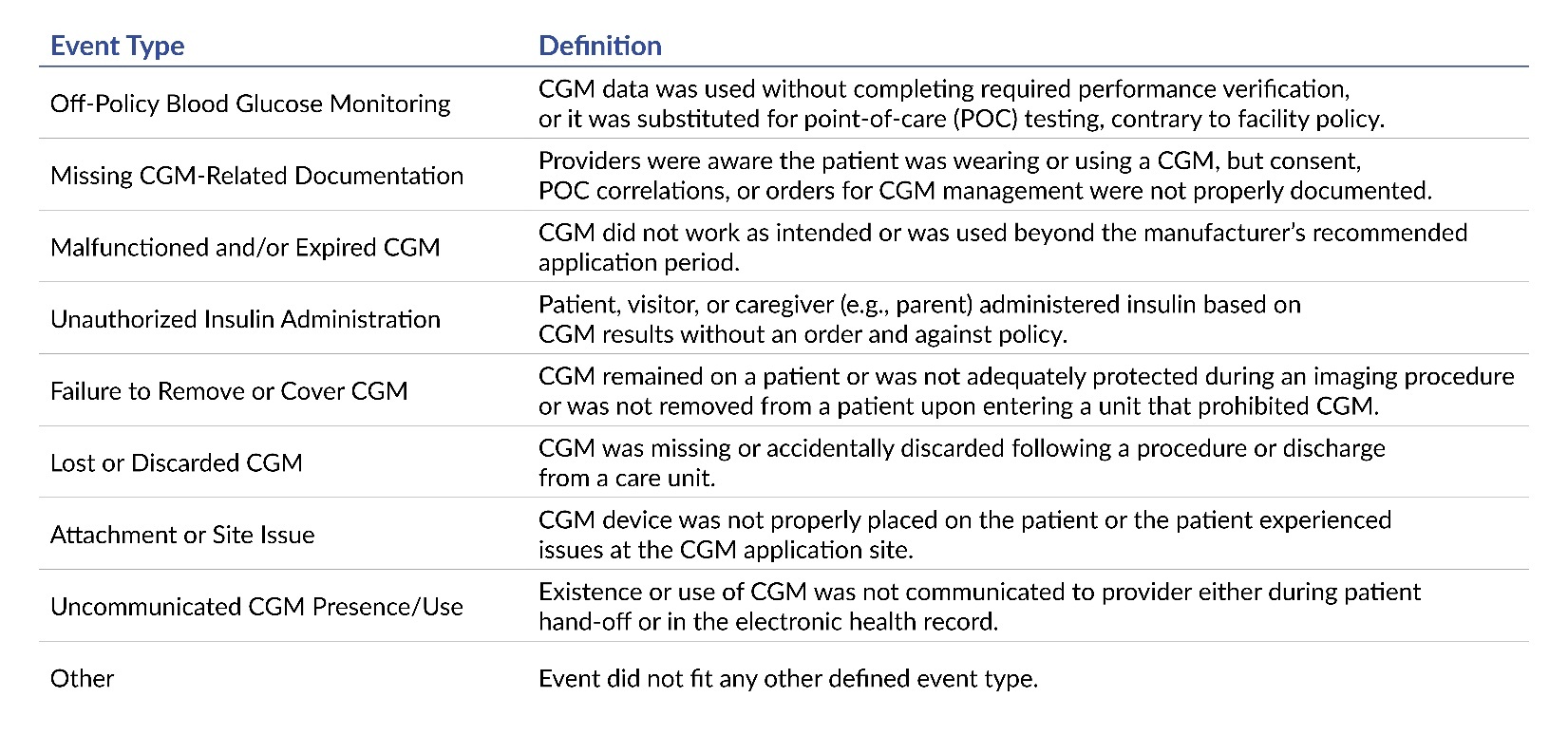
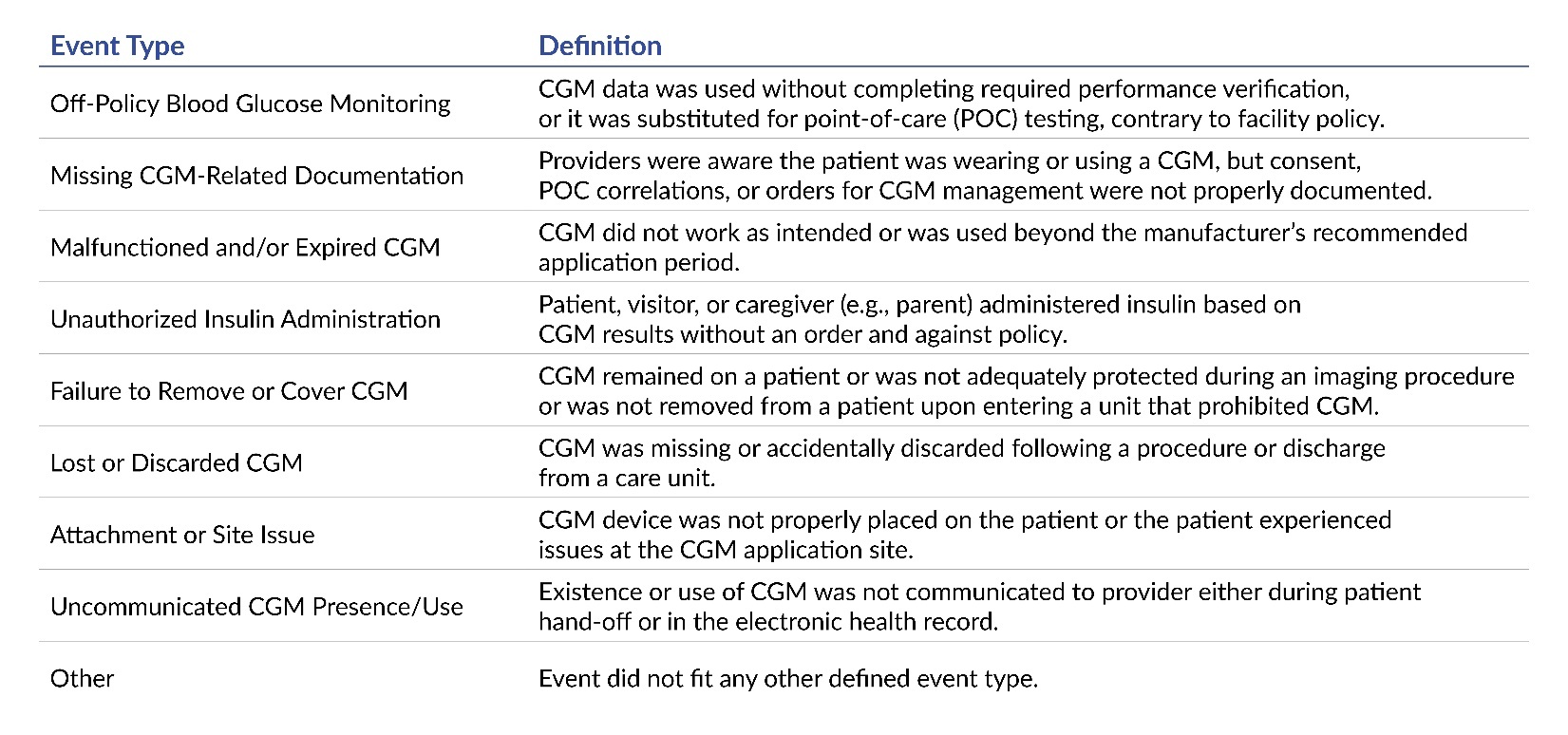
Reports representing CGM risk events were each coded with one event type, as shown in Table 1. If the report described a situation in which more than one event type could be applicable, researchers deferred to the event type entered by the reporter. If this designation lacked clarity, two researchers discussed contextual factors and the sequence of occurrence to identify the most representative event type related to CGM presence or use. If ambiguity still existed, a third researcher was consulted to reach consensus.
For CGM risk events that included descriptions of subsequent actions or implications, we used a qualitative synthesis approach to characterize patient impact. Because the level of detail and the nature of clinical interventions varied widely across reports, we did not attempt to quantify these events. Instead, we identified broader patterns and highlighted notable examples to support a more nuanced interpretation of these findings.
We applied the same qualitative approach to CGM mitigation events, characterizing instances in which a CGM alerted providers to clinically relevant abnormal glucose values (hypoglycemia or hyperglycemia) or revealed failures or inaccuracies in POC equipment.
Data Analysis
We used a retrospective mixed-methods design with an exploratory sequential approach.28 For CGM risk events, we began with a qualitative review and then quantified selected variables for further analysis. However, patient impact within CGM risk events and all CGM mitigation events were analyzed qualitatively only, using the same synthesis approach described above to capture broader themes and associations. Quantifiable variables were measured by frequency and assessed using descriptive data analysis to identify patterns and relationships. Descriptive analysis characterizes phenomena through meaningful numerical summaries and data visualization29; while it does not establish causal relationships, it helps explain occurrences, suggests potential underlying factors, and generates hypotheses for future study.29
Results
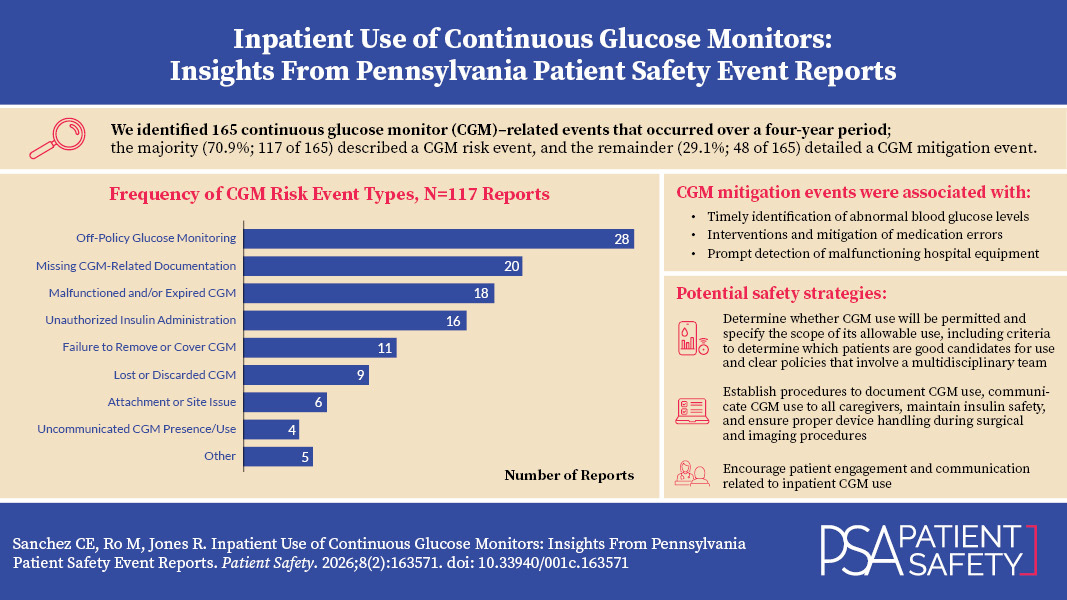
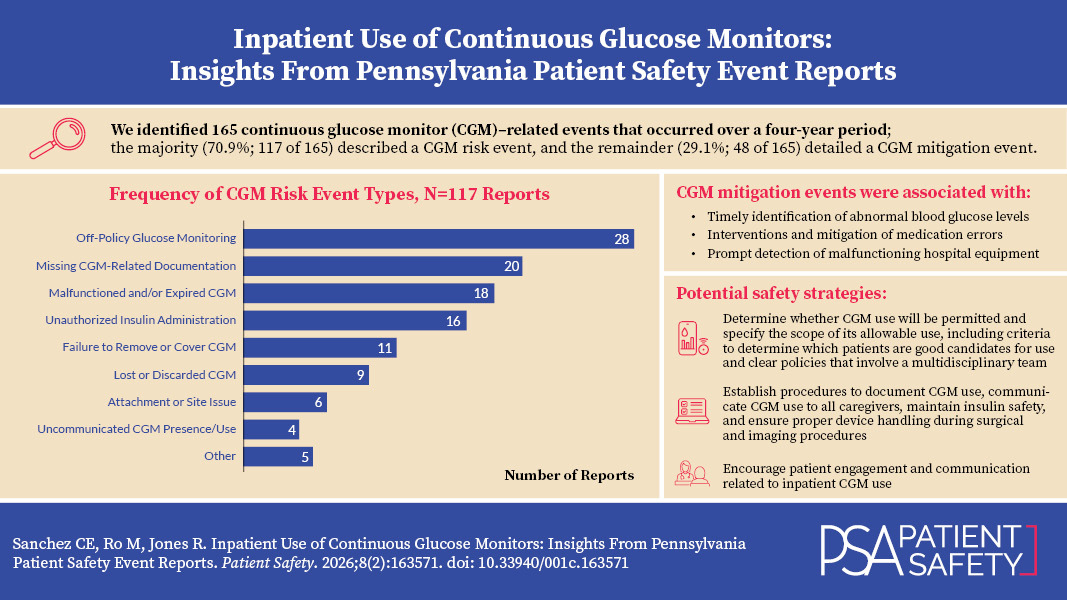
Through manual review, we identified 165 relevant reports from 51 hospitals. Of these, the majority (70.9%; 117 of 165) described a CGM risk event, and the remainder (29.1%; 48 of 165) detailed a CGM mitigation event.
CGM Risk Events
Among the 117 CGM risk events, 56.4% (66 of 117) involved female patients and 43.6% (51 of 117) involved male patients. The median age for adult patients was 59.5 years with a maximum of 92 years. Pediatric patients, defined as those under 18 years of age, were involved in 17.9% of the events (21 of 117), and their median age was 12.
More than half of the CGM risk events were concentrated in four care area groups: Medical-Surgical (23.9%; 28 of 117), Pediatric, (11.1%; 13 of 117), Specialty Unit (11.1%; 13 of 117), and Imaging/Diagnostic (9.4%; 11 of 117).
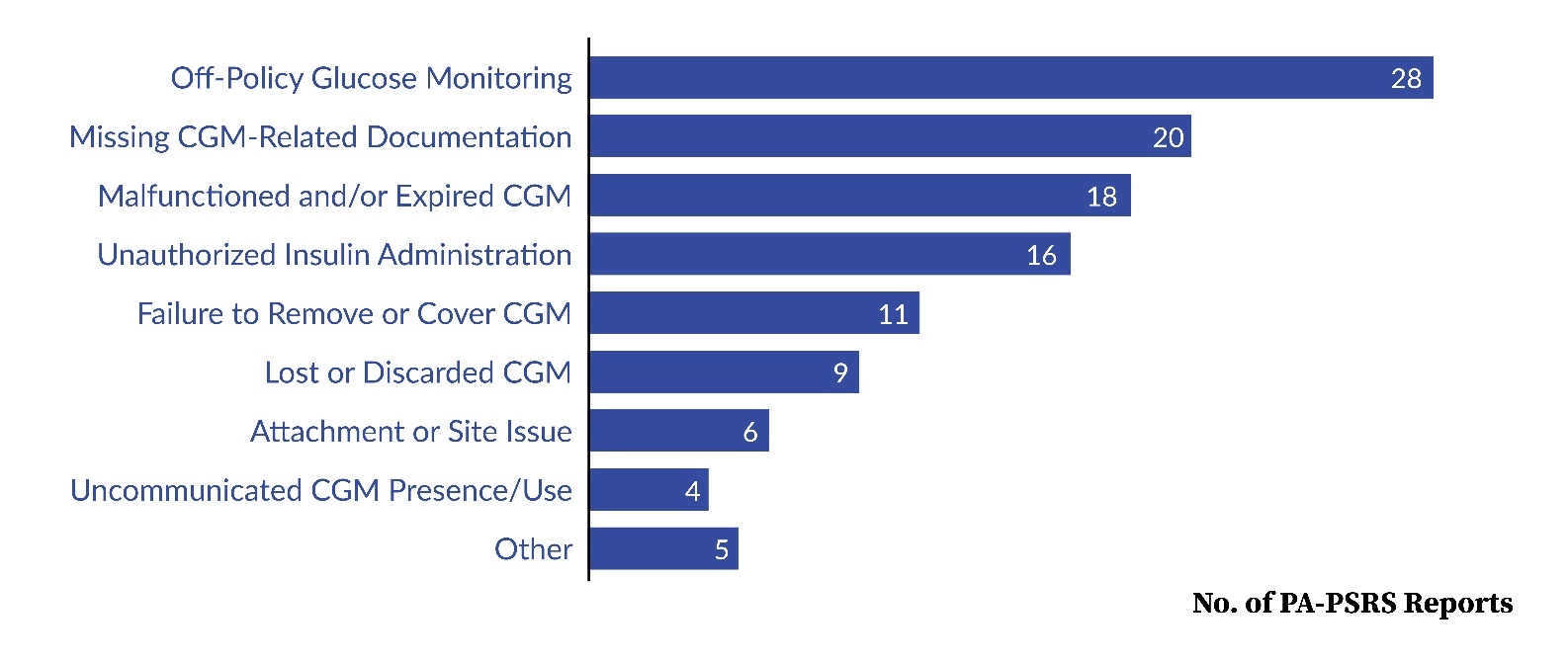
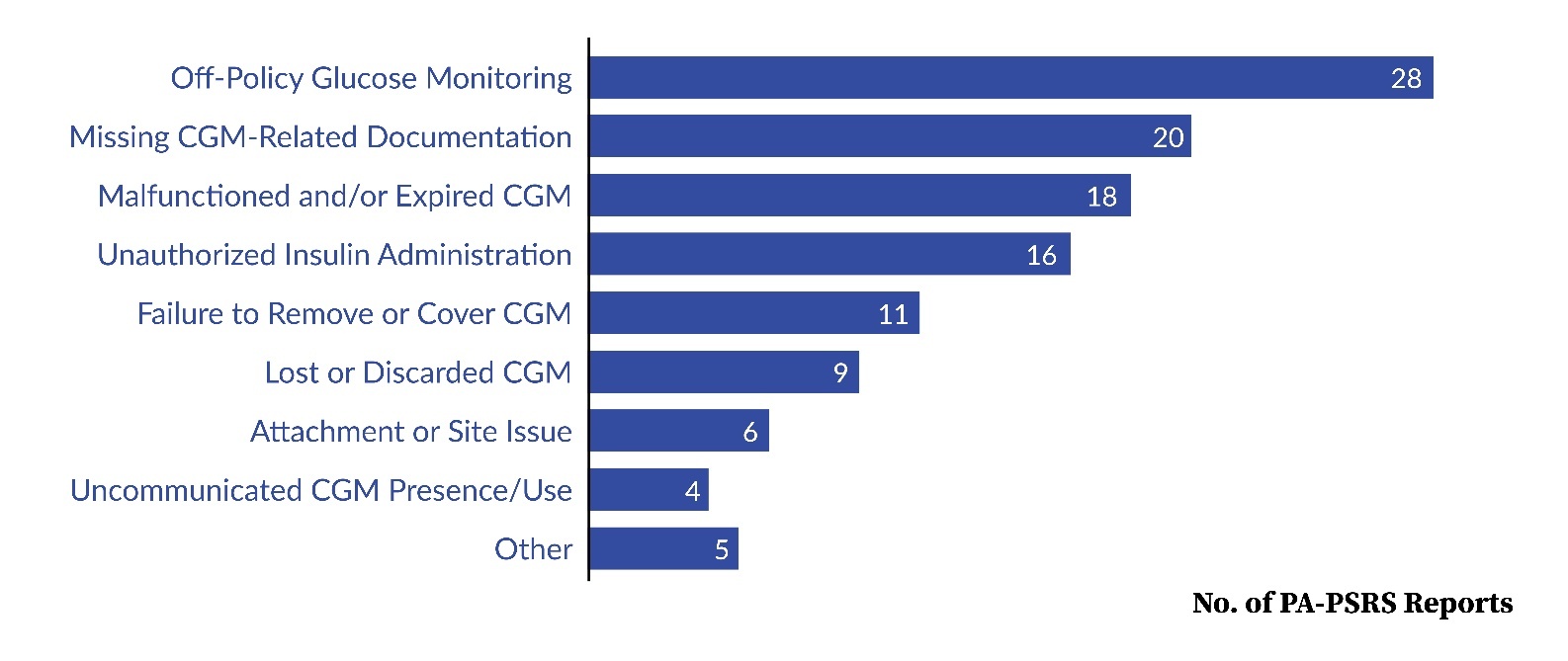
Figure 2 shows the frequency of CGM risk event types. The most frequent was off-policy blood glucose monitoring (23.9%; 28 of 117), followed by missing CGM-related documentation (20 of 117; 17.1%), malfunctioned and/or expired CGM (15.4%; 18 of 117), unauthorized insulin administration (13.7%; 16 of 117), and failure to remove or cover CGM (9.4%; 11 of 117).
The event type with the highest frequency of reports, off-policy blood glucose monitoring (23.9%; 28 of 117), described either providers or patients failing to adhere to established facility protocols mandating the use of POC testing across a range of clinical processes. In these reports, POC testing was required for documentation of glucose levels in the electronic health record (EHR) for insulin administration and, in some cases, for verification of CGM readings before they could be used. While most of these involved the general endocrinology patient population, some included more specific clinical contexts, such as a transplant patient receiving insulin infusion.
The second most frequent event type, missing CGM-related documentation (20 of 117; 17.1%), reflected the failure to complete required documentation to acknowledge and/or authorize the inpatient use of a CGM. As a result, CGM-related orders and forms were not properly recorded in the EHR and linked to its associated subsystems, such as medication administration records, laboratory records, and device records (e.g., lines, drains, and airway devices). This prevented effective communication of CGM-related information among interdisciplinary providers and limited patients’ ability to consent and acknowledge the hospital policies governing the use of CGMs.
When inpatient CGM use was permitted, some patients experienced challenges due to malfunctioned and/or expired CGM (15.4%; 18 of 117). Examples included inaccurate glucose readings (e.g., correlation value with POC exceeding 20%), sensor damage that prevented CGM activation, failure to alert abnormal glucose levels, and connectivity issues with the phone or the insulin pump.
Of the 16 reports detailing unauthorized insulin administration, 5 (31.3%) involved the use of insulin pumps. Additionally, 2 reports (12.5%) involved pediatric patients: In one, insulin was administered by a parent against policy, and in the other, a teenage patient managed insulin independently in the absence of a parent or guardian. Other reports in this event type described associated insulin medication errors involving dosing discrepancies or administration of an extra dose.
Furthermore, the majority (90.9%; 10 of 11) of reports involving a failure to remove or cover CGM occurred prior to or during imaging procedures such as magnetic resonance imaging (MRI), X-rays, and CT scans. The remaining report described a patient who was admitted to a behavioral unit that prohibited CGM devices; however, the device was not removed before the patient’s admission.
Further analysis identified three event types in which patients’ desire to use their personal CGM contributed to safety-related issues: off-policy blood glucose monitoring, unauthorized insulin administration, and failure to remove or cover CGM. Of the 28 off-policy blood glucose monitoring reports, 5 (17.9%) involved patients who were permitted to wear their personal CGM but were unwilling to undergo the required POC testing. Nearly all unauthorized insulin administration reports (15 of 16; 93.8%) and 2 of the 11 (18.2%) reports involving a failure to remove or cover CGM described patient preference for autonomy as a factor. Altogether, these behaviors appeared in 22 reports.
Patient Impact
Across the CGM risk reports, patients were described as being affected in several ways, including:
-
Additional clinical interventions or monitoring, such as insulin or glucagon administration, extra blood glucose checks, or transfer to the intensive care unit (ICU)
-
Delays or cancellations in care, including imaging or procedures canceled by the treating provider
-
Skin-related complications, such as tears, hematomas, or infections at the application site
-
Replacement of CGM devices or components
CGM Mitigation Events
In 48 of the 165 (29.1%) relevant reports, the presence or use of a CGM in the inpatient setting described a CGM mitigation event. Although these findings were incidental and not the primary objective of the study, these reports reflected collaboration between patients and providers. The mutual exchange of glycemic information facilitated timely identification of abnormal blood glucose levels, along with appropriate interventions and mitigation of medication errors. In some cases, information from a patient’s personal CGM enabled prompt detection of malfunctioning hospital equipment when compared with the POC data.
Discussion
Implications of Findings
Our analysis highlights various ways in which patient safety can be affected by inpatient CGM use. Commonly reported CGM risk events included off-policy blood glucose monitoring, missing CGM-related documentation, malfunctioned or expired CGM, and unauthorized insulin administration. Patients who experienced a CGM risk event faced a range of impacts, such as increased monitoring, transfer to a higher level of care, and delayed or canceled procedures.
Additionally, our data revealed that some patients expressed a preference for continuing to use their personal CGM during hospitalization, which contributed to off-policy blood glucose monitoring due to unwillingness to undergo POC testing, unauthorized self-administration of insulin, and refusal to remove the CGM for procedures. Patients accustomed to managing their own glucose via a CGM may find it difficult to release that responsibility to providers. Furthermore, when asked to remove their CGM, there may be personal and clinical concerns about replacing the CGM. These situations underscore the importance of patient education regarding how their glucose levels will be monitored and managed while they are hospitalized.21
Although our primary objective was to characterize safety risks associated with CGM use, our study also captured CGM mitigation events describing situations in which CGM use reduced the risk of patient harm in the inpatient setting, supporting prior studies showing benefits of inpatient CGM use.7,11,13,15,22,24 In these instances, CGM data alerted providers to abnormal blood glucose levels or revealed problems with hospital equipment. For patients admitted with a CGM, encouraging the sharing of personal device alerts or data with providers may help establish a mutual understanding of the patient’s glycemic status, thereby informing the ongoing treatment plan. While these findings align with previous research demonstrating that inpatient CGM use can be associated with positive patient outcomes,10–20,22,24 they were incidental and should not be interpreted as a comprehensive assessment of CGM-related risk mitigation.
The policy environment surrounding inpatient CGM use provides important context for interpreting these events. Because inpatient CGM use is currently considered off-label, hospitals may have policies that restrict or prohibit its use,30 and these policies may vary across care areas. For example, a medical-surgical unit may permit inpatient use of a personal CGM if the proper consent, documentation, and care plan are in place. However, devices typically must be removed for certain surgical and imaging procedures, such as MRI.1,31 Our data show that removing CGMs for procedures can lead to discarded or lost CGMs, frustrating patients in the process and complicating care. Imaging and surgical services should therefore develop clear policies outlining which procedures require sensor removal, which can safely proceed with the device in place, and how CGM devices should be handled before and after procedures.7,21,31
Potential Safety Strategies
Table 2 outlines potential safety strategies identified in prior literature alongside insights derived from the PA-PSRS data analyzed in this study. We designed these strategies to address the CGM risk events we observed, including policy deviations, documentation gaps, and events involving patient-centered factors. Collectively, they focus on reducing the risks associated with inpatient CGM use.
Mutual understanding and adherence to policy by both providers and patients emerged as an overarching theme in our study and is reflected across multiple categories and safety strategies in Table 2. Facilities should review existing policies and, when necessary, develop new standardized policies21,32,33 while ensuring that staff are educated on any updates or changes.7,21 Collaboration between patients and providers is essential for effective inpatient CGM use,21,22 and providers should ensure that patients understand facility policies21 and sign consent forms documenting that understanding.21
Future Directions
Future research should explore the feasibility of implementing policies that support inpatient CGM use for blood glucose monitoring, recognizing that policy needs may differ across care areas. Reevaluating current practices with attention to the specific requirements of each setting may help guide effective policy development. We also found that CGM use may reduce the risk of patient harm in certain scenarios, highlighting the value of continued work to identify strategies that promote safe and effective inpatient use.
Limitations
The quality of information provided in the free-text fields of PA-PSRS reports varies, with some reports containing more detailed information than others, which limited the full scope of certain variables in our study. Information about ways in which CGMs may mitigate risk in the inpatient setting is also likely underrepresented. These examples were captured only as incidental findings, and such details would not be expected to appear consistently in event narratives or other free-text fields. As a result, the risk mitigation events we identified should not be interpreted as a comprehensive or systematic account of all the ways in which inpatient CGM use can reduce the risk of patient harm. Finally, the potential safety strategies presented in Table 2 are not exhaustive, as our aim was to focus on the types of CGM risk events observed in our data rather than provide a full review of all possible risk reduction strategies and their effectiveness.
Conclusion
This analysis indicates that inpatient CGM use can introduce notable patient safety risks while also providing meaningful benefits. Inpatient use was associated with several types of CGM risk events, including policy deviations, missing documentation, and CGM device issues. Reported impacts ranged from delays or cancellations in care to the need for clinical intervention. At the same time, some reports described how CGMs helped mitigate harm by alerting staff to abnormal glucose levels and identifying issues with hospital POC equipment. As CGM use becomes more common among hospitalized patients, clear and consistent policies paired with strong communication between patients and providers will be essential to support safe and effective inpatient use.
Notes
This analysis was exempted from review by the Advarra Institutional Review Board.
Data used in this study cannot be made public due to their confidential nature, as outlined in the Medical Care Availability and Reduction of Error (MCARE) Act (Pennsylvania Act 13 of 2002).
Artificial intelligence (Copilot Chat) was used only to improve sentence clarity. No AI was used for generation of original content. The authors take full responsibility for the accuracy and integrity of the manuscript.
Disclosure
The authors declare that they have no relevant or material financial interests.
About the Authors
Christine E. Sanchez (chrsanchez@pa.gov) is a research scientist on the Data Science & Research team at the Patient Safety Authority. She is responsible for utilizing patient safety data, combined with relevant literature, to develop strategies aimed at improving patient safety in Pennsylvania.
Myungsun (Sunny) Ro (mro@pa.gov) is a research scientist on the Data Science & Research team at the Patient Safety Authority (PSA). Her responsibilities include analyzing and synthesizing data from various sources to identify opportunities to improve patient safety, as well as writing scientific articles for publication in the PSA’s peer-reviewed journal, Patient Safety.
Rebecca Jones, director of Data Science & Research for the Patient Safety Authority, leads a multidisciplinary team advancing patient safety through research that informs improvements in healthcare systems and delivers insights that bridge the gap between evidence and real-world practice. A registered nurse with a Master of Business Administration in healthcare management and certifications in patient safety, human factors, and risk management, she brings clinical experience, analytical expertise, and systems thinking to complex challenges. She has authored more than 40 peer-reviewed publications and contributed to national patient safety efforts with organizations such as the Institute for Healthcare Improvement, the National Quality Forum, and the Society to Improve Diagnosis in Medicine.
PA-PSRS is a secure, web-based system through which Pennsylvania hospitals, ambulatory surgical facilities, abortion facilities, and birthing centers submit reports of patient safety–related incidents and serious events in accordance with mandatory reporting laws outlined in the Medical Care Availability and Reduction of Error (MCARE) Act (Act 13 of 2002). All reports submitted through PA-PSRS are confidential and no information about individual facilities or providers is made public.
Within the PA-PSRS acute care database, there are 168 care areas for facilities to use to identify where events occur. Each of these care areas is then placed into one of 23 higher-level care area groups.
The keywords chosen for fuzzy logic matching were based on pre-study pilot testing of the keywords in PA-PSRS reports; we strategically selected these three keywords to apply fuzzy matching to reduce the false positive rate.
To maximize completeness, we combined sex at birth and gender identity fields; when discordant or missing, we confirmed the correct value with a representative from the reporting facility to assign a single “patient sex” variable for analysis.