In healthcare settings, clear communication is essential to keeping patients safe. The colored wristband, a seemingly simple tool intended to improve communication among staff, has been shown to introduce risk rather than clarity when used inconsistently.1 Standardization of wristband colors and their meaning reduces confusion, prevents errors, and promotes safer patient care.2
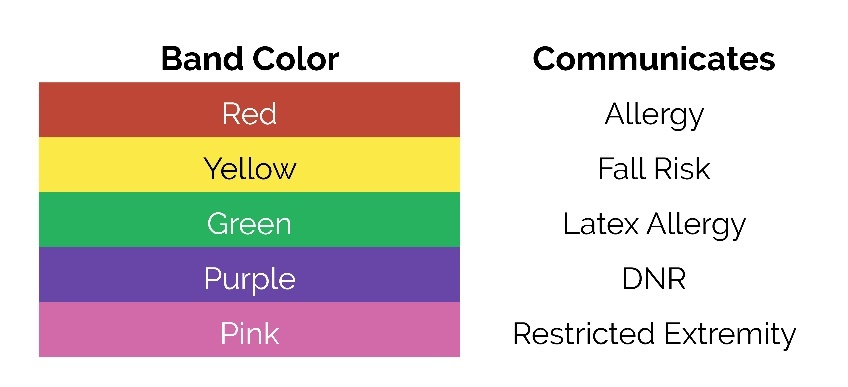
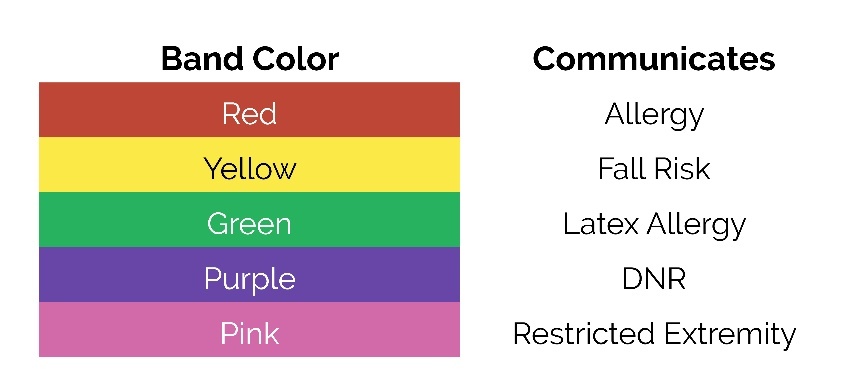
The Color of Safety Task Force, led by the Patient Safety Authority (PSA) in collaboration with hospitals across Pennsylvania in 2006, addressed this problem head-on by establishing a standardized, limited palette of wristband colors across Pennsylvania hospitals (Figure 1).3 Before standardization, Pennsylvania hospitals used a wide variety of wristband colors that often had conflicting meanings. A purple band might signal “do not resuscitate” at one facility and “fall risk” at another. Staff transferring between hospitals, travelers, and even patients moving across care settings faced genuine safety risks when color meanings shifted without warning. This inconsistency undermined the very purpose of alert bands: rapid, reliable communication.4
It may seem logical to add bands for additional alerts; however, this can lead to additional safety issues, such as cognitive overload, dilution of urgency, and documentation redundancy. Standardization works best when it is simple and universally understood.1 Color-coded wristbands are most effective when the number of colors is intentionally limited. Human factors research shows that as the number of colors increases, so does the cognitive load on staff, making it harder to recall what each color means, especially in fast-paced or high-stress situations. Too many colors can blend together, be confused in low lighting, or lose visibility on different skin tones. Standardizing a small, consistent set of wristband colors supports quicker recognition; reduces the risk of error; and helps every team member, new or experienced, respond safely and reliably to patient needs.5
While the Color of Safety project occurred 20 years ago, the topic of adding additional colors continues to come up. PSA recently received inquiries about adding additional colors to the approved list. We took this topic to our Patient Safety Advisory Panel for input from stakeholder facilities. The Panel determined that neither the literature nor current practice would support making changes and recommended against developing a work group to explore it further, as adding colors could create confusion and increase the potential for errors.6
For more information on this project and recommendations refer to Patient Safety: Color Banding; Standardization and Implementation Manual, available at patientsafety.pa.gov/pst/Documents/Color-Coded_Wristbands/wristband_manual.pdf.
Disclosure
The authors declare that they have no relevant or material financial interests.
About the Author
Shirley Dominick (shdominick@pa.gov) is a patient safety advisor on the Outreach & Education team at the Patient Safety Authority. In this role, she guides, educates, and collaborates with healthcare facilities in Pennsylvania to reduce harm.