Introduction
Background
Communication failures among healthcare professionals are consistently identified as a leading contributor to patient harm.1 To address this, hospitals are adopting structured communication strategies to enhance team coordination and mitigate risk. One strategy is the proactive safety huddle, a concise, multidisciplinary team meeting designed to identify and address potential patient safety risks before adverse events occur.2
Unlike traditional reactive approaches, proactive safety huddles emphasize anticipatory planning and encourage open communication among care team members to identify and address concerns early. Within this framework, proactive safety involves eliciting clinical concerns, collaboratively discussing risk-mitigation interventions, and assigning actionable responsibilities to owners to ensure timely implementation and accountability.2 Proactive safety huddles are often associated with improvements in the quality of information sharing, efficiency, accountability, individual empowerment, and promoting collaboration among team members.3
The Harm Prevention (HP) program at Nemours Children’s Hospital in Wilmington, Delaware (NCH-DE), a 223-bed, freestanding pediatric hospital, recognized an opportunity to shift from reactive to proactive harm prevention by reviewing patients at risk of events such as central line–associated bloodstream infection (CLABSI). CLABSIs significantly impact patients’ outcomes by increasing mortality and prolonging hospital stays, and result in significant revenue losses for healthcare facilities.4 While all patients with a central venous line (CVL) are at risk for CLABSI, the team evaluated themes from patient events through a common cause analysis (CCA) and worked to determine high-risk CLABSI criteria, discussed below. This approach emphasizes early identification of risk factors and timely intervention.
In 2023, the NCH-DE CLABSI prevention efforts were restructured in response to a CLABSI rate that exceeded the national benchmark. In this new structure, a CLABSI leadership team was built with the goal of driving the CLABSI reduction efforts across the hospital. The team includes HP, nursing leaders, a physician leader, infection prevention, quality improvement, patient safety, and executive sponsors from both nursing and physician administration. CLABSI leadership supports the CLABSI taskforce, which is made up of multidisciplinary members from all areas of the hospital that insert and care for patients with CVLs, plus other supporting members, such as infectious disease and the family advisory council.
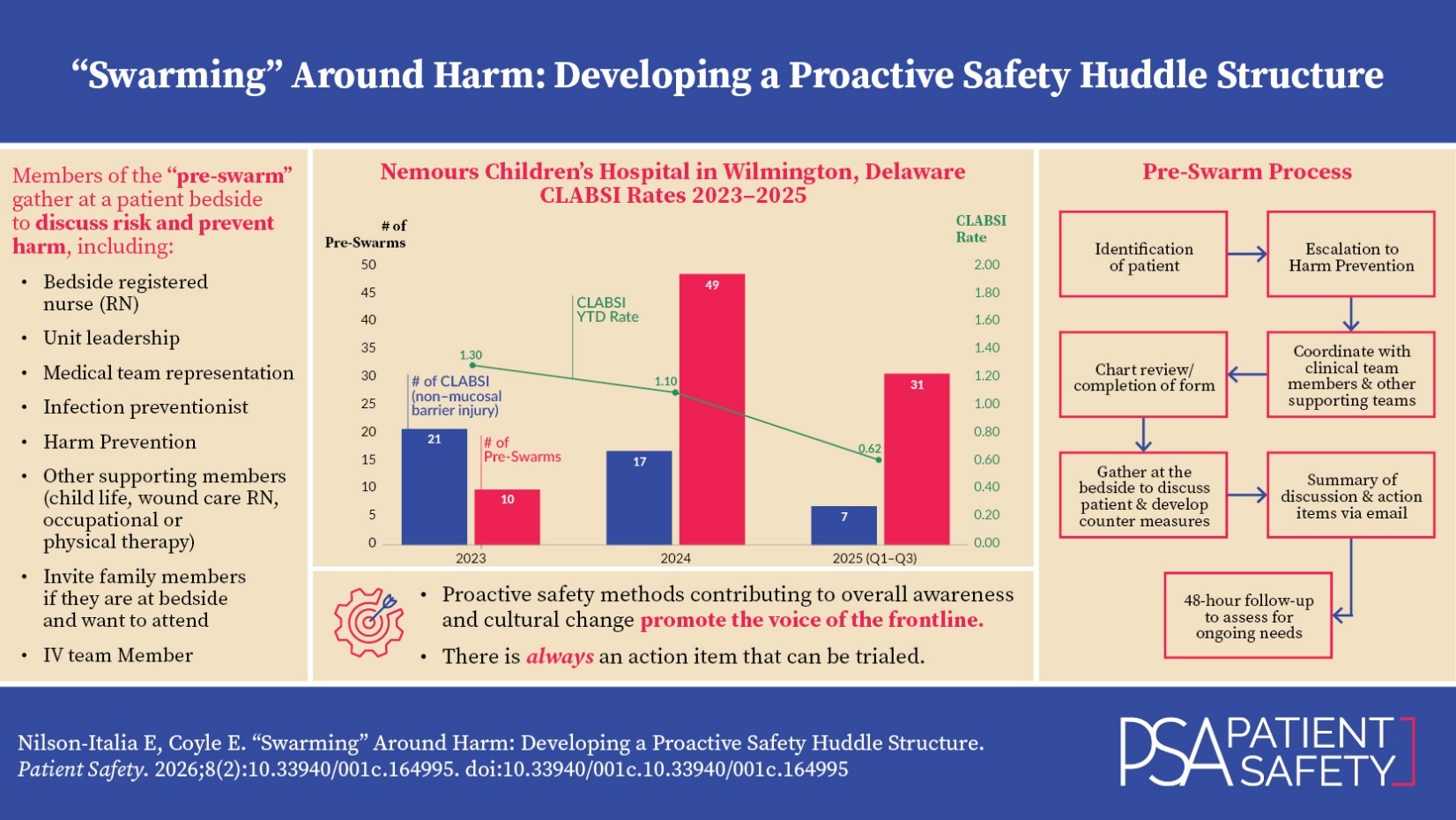
This restructured team moved beyond conventional reactive methods, such as apparent cause analysis (ACA), and focused on proactive strategies, such as identifying gaps in bundle compliance, unscheduled CVL dressing changes, and leveraging multidisciplinary collaboration to prevent infections before they occur. The team introduced the proactive safety huddle process, called a “pre-swarm,” to help lower the rate of CLABSI. This process identifies potential risk factors and implements strategies to mitigate risk, shifting the mindset of harm prevention from reactive to proactive.
The multidisciplinary team engaged in these huddles includes the patient’s primary medical provider and bedside nurse, unit nursing leadership, a CLABSI leadership member, an infection preventionist, intravenous (IV) team, and HP. A child life specialist or social worker is also included for patients with behavioral concerns related to CVL care. Patients, when developmentally and age appropriate, and their family members are encouraged to participate in the pre-swarm process. This diverse team ensures a comprehensive assessment of patient risks and facilitates timely, coordinated interventions.
Proactive safety huddles/pre-swarms are a crucial tool for promoting a culture of safety and improving patient outcomes. In 2024, the HP team developed the aim to conduct 25 CLABSI pre-swarms across inpatient units, reinforcing the hospital’s commitment to proactive safety, risk mitigation, and continuous quality improvement.
Methods
Through ACA event reviews, the CLABSI leadership team identified several recurring themes. On a quarterly basis, the HP program manager and quality improvement specialist (QIS) assigned to the CLABSI taskforce would compile the contributing factors, patient/CVL characteristics, and other discrete fields from the ACA form into a CCA to assist with identification of themes or trends in patient events. As themes began to emerge, the team wanted to explore the possibility of targeting patients with these characteristics or risks in the future to see if there were any interventions that could be proactively put in place to prevent a CLABSI from occurring.
The CCA results were presented to the multidisciplinary CLABSI leadership team for review, and a list of risk factors was generated based on the common themes. This list became the initial criteria for a proactive safety huddle, or pre-swarm. The concept of “swarming” around a patient has been described as a process for patient safety review that happens at the bedside, without delay; includes the key clinical members involved in that patient’s care; and generates specific deliverables.5 The NCH-DE team had embraced swarming as their event review process prior to moving to an ACA format. Because the term and the structure of a swarm were familiar to the clinical teams, the term pre-swarm was adopted to indicate a proactive gathering at a patient bedside to discuss the patient’s risk and prevent an event of harm.
The existing ACA form for CLABSI events was modified to include capture of the criteria that triggered the pre-swarm, discussion of risk factors, identification of action items, timeline for follow-up, and a summary of what countermeasures needed to be put in place to keep the patient free from a CLABSI. Fields from the ACA form that remained untouched included patient details/history, CVL properties, and CLABSI maintenance bundle elements. The goal was to have a form that could be used by any team member to guide a conversation and identify action items. The form would be completed through chart review prior to the pre-swarm and be used to guide the conversation, and the pre-swarm facilitator would make edits as the clinical team provided more detail about the patient’s condition.
Developing the Process
In an effort to trial the new pre-swarm form, the HP program manager and patient safety specialist assigned to the CLABSI taskforce identified a neonatal intensive care unit (NICU) patient who was at risk for CVL dressing contamination due to the close proximity of an ostomy. The two performed a chart review to complete the pre-swarm form, engaged stakeholders from infection prevention and the NICU clinical team, and gathered at the patient’s bedside to conduct the pre-swarm. Key clinical stakeholders included bedside nursing, nursing leadership (nurse manager and clinical nurse specialist or clinical nurse educator), charge nurse, members of the medical team (nurse practitioner, attending physician, and IV team member), and unit-based CLABSI champions. In the initial conversation, the team identified several countermeasures aimed at preserving the integrity of the CVL dressing, but identified that additional stakeholders should be present to weigh in. The team identified that the wound care nursing team would have valuable insight to contribute related to the care of the ostomy located close to the CVL.
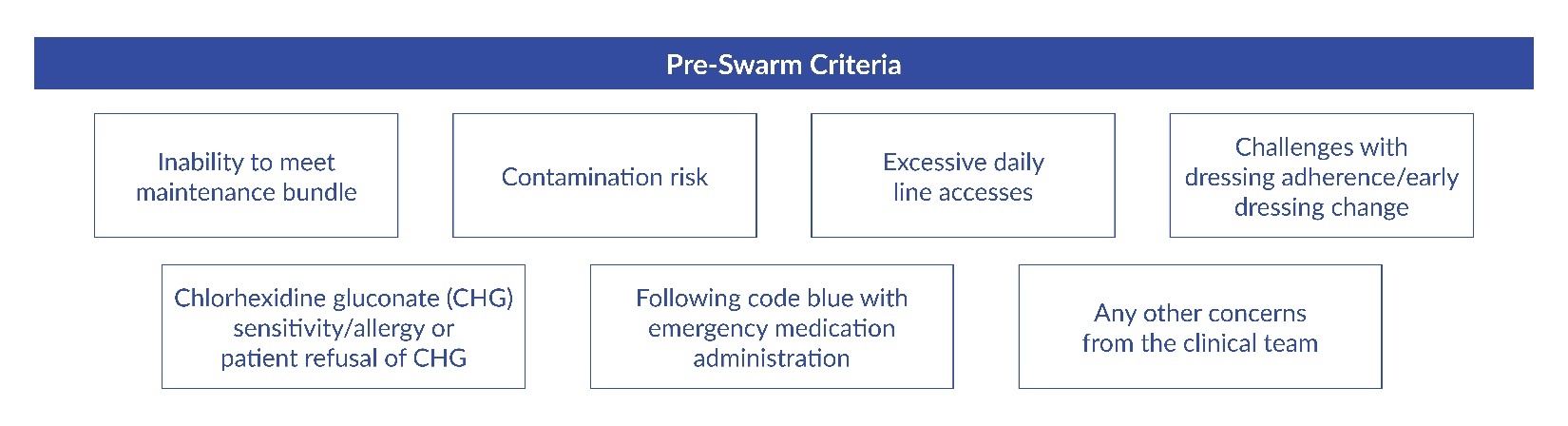
As the HP and patient safety teams continued to identify and initiate pre-swarms, the process evolved by standardizing pre-swarm criteria (Figure 1) and implementing the following interventions:
-
Identification of additional stakeholders based on a patient’s risk/condition (e.g., IV team, wound care, child life, consultative medical or surgical services)
-
Development of a standard preamble to level set the conversation, which helps clarify that the goals of the pre-swarm were to (1) identify risk, (2) assure compliance with the CLABSI prevention bundle, (3) develop a plan to address any gaps in the bundle, and (4) identify “beyond the bundle” interventions that could customize the patient’s care and help keep them free from CLABSI
-
Inclusion of a standard summary at the end of discussion sent to all invitees via email following the pre-swarm: what risk factors exist, what opportunities for improvement were identified, and what are the action items (with assigned owners)
-
Introduction of a follow-up email sent to the team 48 hours after the pre-swarm to track completion of action items and assess need for a follow-up pre-swarm
As the pre-swarm process became more robust, the CLABSI leadership team wanted to find a forum to share the learnings across the hospital. Review of pre-swarm summaries was added as a standing agenda item to the bimonthly CLABSI taskforce meeting. The de-identified summary included an overview of the reasons for initiating the pre-swarm, a brief patient synopsis, and the action items that were developed. This allowed other units to learn from these discussions and suggest countermeasures that may be applicable to their patient populations.
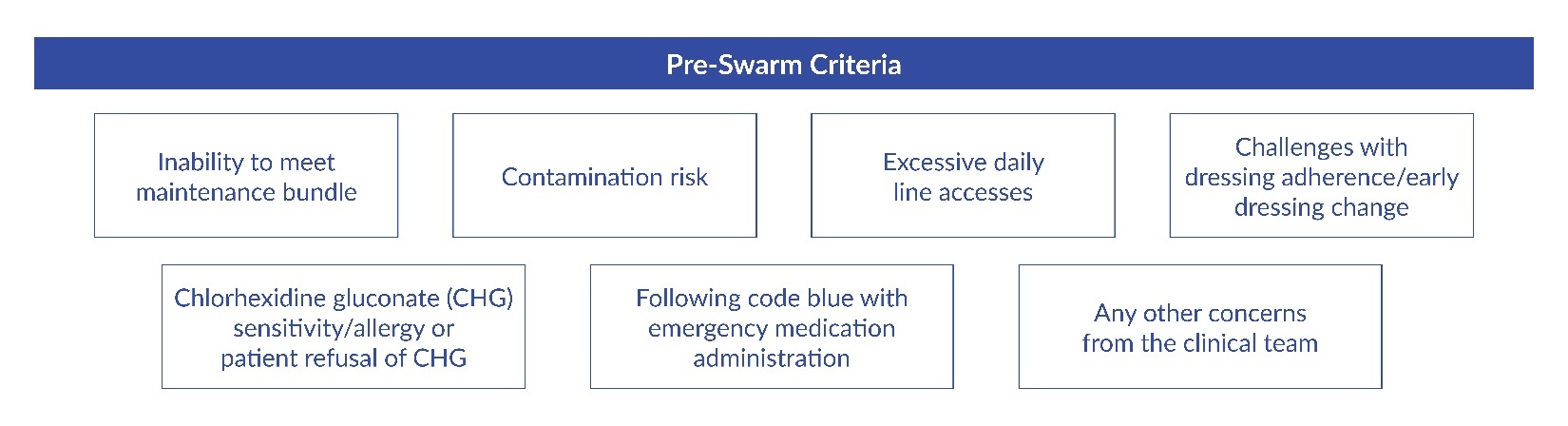
The team continues to evaluate pre-swarm criteria on an ongoing basis. With quarterly CCA completion, new risks and trends are identified and added to the pre-swarm criteria. When specific opportunities for improvement are identified during an ACA, the team will often discuss whether the opportunity is isolated to the specific case or could be a more global one. Frequently, the global opportunities are identified as possible additions to the list of pre-swarm triggers. Finally, the team added a section to the CLABSI ACA form for group discussion related to whether a pre-swarm was completed for the patient. If one was not, the team evaluates whether the patient met pre-swarm criteria and/or whether they would have benefited from a pre-swarm prior to their CLABSI.
Results
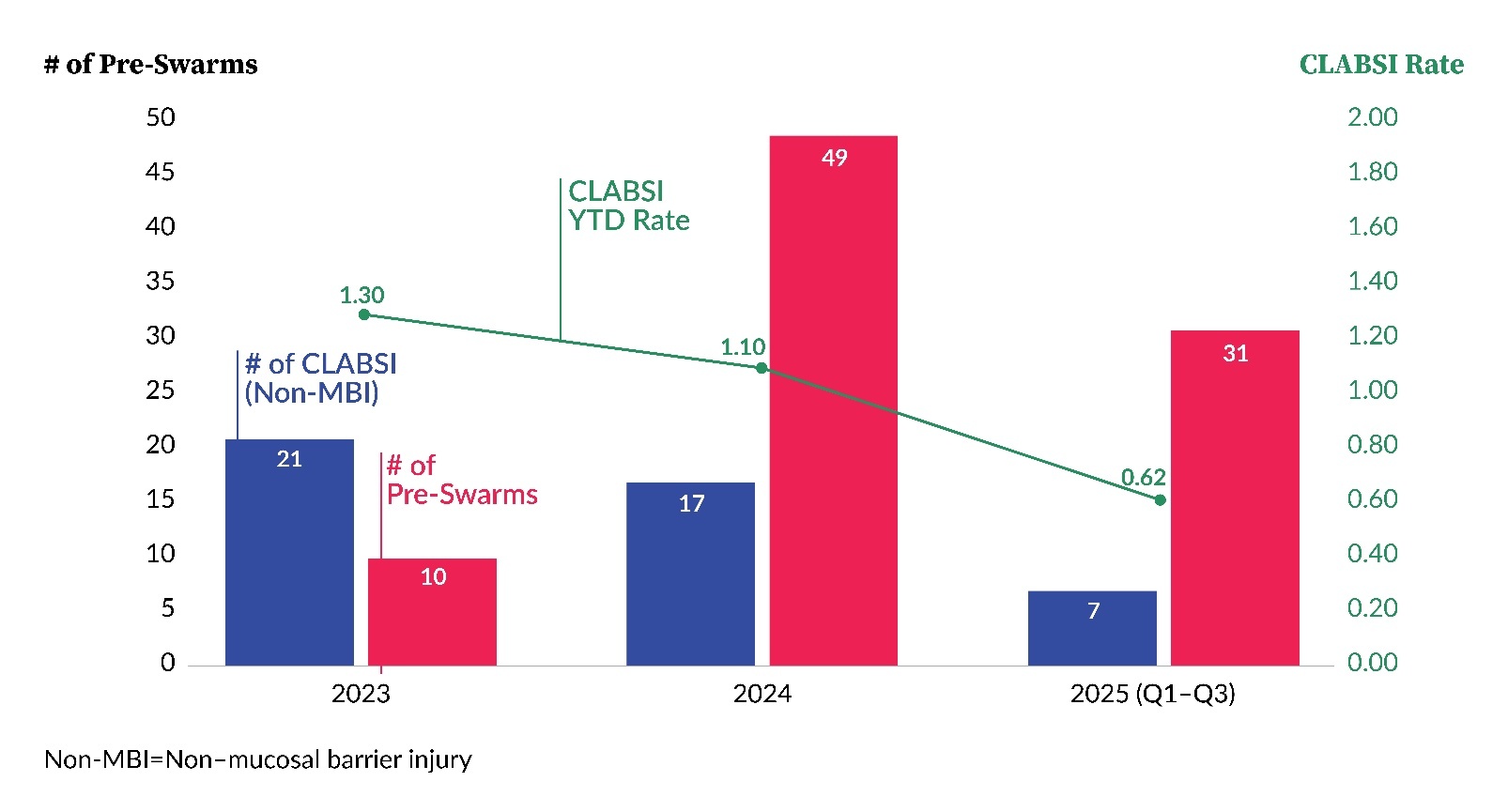
In 2023 while the pre-swarm process was being developed, the HP and patient safety teams conducted approximately 10 pre-swarms on a trial basis. Each event informed further development of the criteria and the pre-swarm form. As the team began to identify the successes from holding pre-swarms, the clinical members of the CLABSI taskforce were being encouraged to identify high-risk patients on their units and to initiate a pre-swarm. The CLABSI taskforce set a goal in 2024 to complete 25 pre-swarms for the year, approximately two per month.
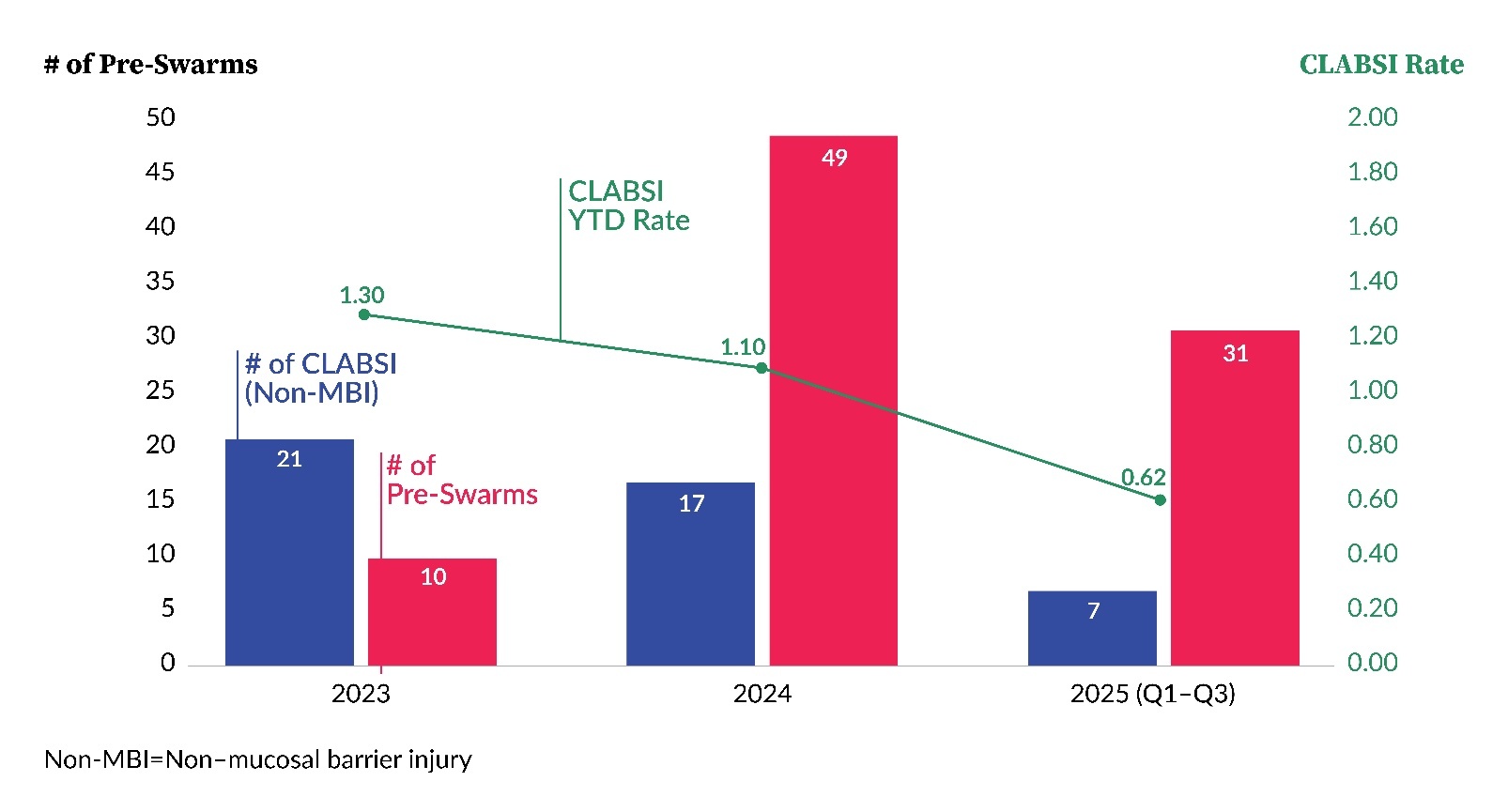
By the end of 2024, 49 pre-swarms were conducted across the hospital, nearly doubling the goal (Figure 2). None of the patients for whom a pre-swarm was conducted went on to experience a CLABSI during their hospitalization. Concurrently, the hospital CLABSI rate decreased from 1.30 at the end of 2023 to 1.10 at the end of 2024, a 15.4% decrease. In the first three quarters of 2025, 31 pre-swarms were completed, with only one patient experiencing CLABSI. From the end of 2024 through quarter 3 of 2025, the CLABSI rate was 0.62, an additional reduction of 43.7%. The hospital also experienced a centerline shift in December 2024, decreasing from a centerline of 2.14 to a centerline of 0.786. The centerline represents an average over time and serves as a benchmark against other organizations. This over 63% reduction in the NCH-DE CLABSI centerline shows the sustained reduction in CLABSI rates for the hospital.
Additional outcomes included positive relationship building and engagement with members of the multidisciplinary team, such as child life, social work, and the medical residency program. As team members learned about and attended more pre-swarms, they came to the discussion with creative ideas to help prevent infections and partner with patients and families to keep patients safe. Through this and other CLABSI reduction efforts, the organization experienced a positive cultural shift in which all members of the multidisciplinary care team saw CLABSI prevention as a high priority with shared accountability.
Discussion
The pre-swarm process has become widely embraced across the hospital, with many frontline team members identifying opportunities to pre-swarm patients. Where the CLABSI and HP leaders were previously the driving force behind identifying patients for pre-swarms, the onus has largely shifted to the unit nursing leaders, members of the medical team, and clinical nurses at the bedside. When the process was initially developed, attendance at pre-swarms was sporadic and team members often arrived to the conversation without a clear vision of what to expect from a pre-swarm. Over time, and through lived experiences, the pre-swarm process has become a daily standard. Team members are eager to join, and often there will be additional trainees and ancillary team members that join for learning experiences. Nonclinical team members, such as child life and social work, have become important staples in the pre-swarm conversations, and in several instances patient caregivers have also participated. Caregivers who experience their child’s medical team identifying and working to mitigate risk for their child seem to have enhanced confidence in their child’s care team and feel like valued members in the development of their child’s plan of care.
One medical-surgical unit in the hospital embarked on their own pre-swarm project at the same time that the CLABSI taskforce was trialing pre-swarms. The unit developed a process to conduct a pre-swarm on every patient on their unit with a CVL at the time of insertion or admission/transfer to the unit. The results on this unit have been extremely favorable, as they have not experienced a CLABSI on their unit since the start of the pre-swarm project and currently have been two years CLABSI-free.
Once the HP team appreciated the success with CLABSI pre-swarms, the team worked to expand the process across other harm indicators. They followed a similar process with evaluation of common causes, modification of the ACA form, and development of pre-swarm criteria for each indicator. The team is currently performing pre-swarms for catheter-associated urinary tract infections (CAUTIs), ventilator-associated pneumonia (VAP), and pressure injury prevention (PIP).
Limitations
In several instances, patients met the criteria for multiple indicators. Sometimes multiple pre-swarms would be performed in one conversation, but the pre-swarm became lengthy. It was a challenge to interrupt patient care for an extended period of time and to maintain the attendance of all participants for the entirety of the pre-swam conversation. In an effort to condense the conversation but still achieve the same outcomes, the HP team worked to develop a “high-risk patient” pre-swarm process in early 2025. These high-risk pre-swarms are geared towards intensive care unit (ICU) patients with high acuity and multiple high-risk devices.
The process was initially trialed with extracorporeal membrane oxygenation (ECMO) patients who have a CVL, an indwelling urinary catheter, an endotracheal tube, peripheral IVs, and a high risk of pressure injuries. The questions for each indicator were pared down to capture essential information about the risk for each indicator and respect the time of the multidisciplinary team. The format allows for less focus on indicators that are lower risk for the patient, and a more concentrated discussion of the indicators that are identified as the highest risks. A similar summary is sent, mimicking the process of other pre-swarms. Through quarter 3 of 2025, seven high-risk pre-swarms had been completed. The team aims to expand beyond the ECMO population and continue to capture any patient at risk for multiple harm indicators.
Conclusion
Through the transition from reactive to proactive safety methods, the team in a freestanding children’s hospital observed a concurrent reduction in the rate of CLABSI. The multidisciplinary pre-swarm process has been supported by clinical and nonclinical teams involved in patient care, who come together to discuss and mitigate a patient’s risk of harm. Additionally, the methods for pre-swarming have been applied to other harm indicators and to patients at risk for multiple forms of harm. This has contributed to a cultural shift and shared ownership of harm prevention across the hospital.
Disclosure
The authors declare that they have no relevant or material financial interests.
About the Authors
Erin Nilson-Italia (eitalia@nemours.org) is the Harm Prevention coordinator at Nemours Children’s Hospital in Wilmington, Delaware. Clinically, she is a respiratory therapist who has been working in pediatrics for more than 19 years.
Erin Coyle is the Harm Prevention program manager at Nemours Children’s Hospital in Wilmington, Delaware. She has previously worked as a bedside nurse and clinical nurse specialist in the pediatric intensive care unit. She holds her doctor of nursing practice (DNP) from Villanova University.